




Considering Eyelid Surgery for Hooded Eyes? Here’s How It Works

Daniel Ezra, 27 February 2026

Hooded eyes are a common concern, often described as excess skin from the upper eyelid folding downwards and partially covering the natural eyelid crease. For some people, this is simply a genetic trait they have always had, while for others, it develops gradually over time as the skin loses firmness. Although hooded eyelids are frequently discussed in aesthetic terms, they can also have a practical impact, making the eyes feel heavy or limiting the upper field of vision in more advanced cases.

As a result, eyelid surgery on hooded eyes has become a widely searched topic among people looking for a long-term solution. In this article, we explain how eyelid surgery works, who it may be suitable for, and what kind of results people usually expect.

Close-up of a brunette woman with natural makeup and luminous skin resting her face gently on one hand, looking confidently at the camera.

What Causes Hooded Eyelids?

Hooded eyelids can arise for a variety of reasons, and understanding the underlying cause is an important part of determining the most appropriate approach to treatment. In some cases, hooded eyes are inherited. A person may have been born with a particular eyelid structure that creates a naturally hooded appearance from a young age.

More commonly, hooded eyelids develop or worsen as a result of age-related changes in the skin and underlying tissues. Over time, the skin loses its elasticity due to a gradual breakdown of collagen and elastin, the structural proteins that keep skin firm and resilient. At the same time, the tissues that support the upper eyelid (including the muscles and connective structures) begin to weaken. This combination allows the skin of the upper eyelid to droop and fold over the natural crease, creating the characteristic hooded appearance. It is important to note that brow droop can also compress the eyelid tissues, and this sometimes also needs to be corrected.

Unlike sudden changes that might result from injury or illness, hooded eyelids caused by ageing tend to develop slowly. The process is often so gradual that people may not notice it happening until they compare recent photographs with those taken several years earlier. When hooded eyelids shift from being a cosmetic issue to a functional one, it is usually because the excess skin begins to encroach on the upper field of vision.
Close-up portrait of a smiling blonde woman with clear glowing skin gently touching her cheek, soft natural makeup, and a light gray background.

What Do We Mean by Eyelid Surgery for Hooded Eyes?

The term “eyelid surgery” is often used in a general sense, but it is important to understand that it is an umbrella term rather than a description of a single, standardised procedure. Eyelid surgery encompasses a range of surgical techniques that can be applied to the upper eyelids, lower eyelids, or both, depending on the specific concern being addressed.

The most common surgical approach used to treat hooded upper eyelids is blepharoplasty. This is a procedure designed to remove or reposition excess skin, and in some cases, underlying fat, in order to restore a more open and refreshed contour to the upper eyelid. Blepharoplasty is a well-established technique with a long track record in both cosmetic and functional eyelid surgery.

Young Asian woman with eyes closed softly pressing her cheeks with both hands, wearing a white tank top against a clean white background.

Is Eyelid Surgery Right for Hooded Eyes Like Yours?

Deciding whether eyelid surgery is the right option for you depends on a number of factors, including the severity of the hooding, the impact it is having on your daily life, and your personal goals for treatment. There are several common signs that may suggest eyelid surgery is worth considering.

One of the most frequent concerns is the presence of heavy or overhanging upper eyelid skin that creates a hooded appearance even when the eyes are fully open. This can make the eyes look smaller or less defined, and many people find that it contributes to a tired or unapproachable expression. Another common issue is difficulty applying or seeing eye makeup, particularly eyeshadow, because the excess skin covers the area where makeup would normally be visible. It is also common for the excess skin to smudge makeup, making it very difficult to apply.

In more advanced cases, the excess skin on the upper eyelid can begin to interfere with vision. This is particularly true when the skin hangs low enough to obstruct the upper visual field, making it harder to see clearly when looking up or to the side.

However, there are situations where eyelid surgery may not be the most appropriate option. For example, if the hooding is very mild or if the primary concern is related to brow position rather than eyelid skin, a different approach may be more suitable. The decision should always be based on an individual assessment rather than self-diagnosis.

In addition to this, a detailed eye examination is essential to ensure that the surgery is safe. In some patients, particularly with severe dry eye, the surgery may be contraindicated.

Aesthetic and Functional Benefits of Eyelid Surgery

Eyelid surgery for hooded eyes can offer a range of benefits, both aesthetic and functional. From an aesthetic perspective, the procedure can help to create a more refreshed and alert appearance by removing the excess skin that contributes to a heavy or tired look. Many people find that their eyes appear more open and expressive following surgery.

In cases where the hooding has begun to interfere with vision, eyelid surgery can also provide a functional benefit by improving the upper visual field. It is important to clarify that the motivations for seeking eyelid surgery vary widely from person to person. Some people are primarily concerned with appearance, others with function, and many are looking to address a combination of both.

How Eyelid Surgery Works – Treatment Overview

The journey towards eyelid surgery begins with a specialist consultation and a personalised assessment. During this consultation, the surgeon will examine the structure of the eyelids, assess the degree of skin excess, and discuss the patient’s concerns and goals. A detailed examination of the eye itself is also undertaken to ensure that the surgery is safe and that the eye will not be exposed to any problems.

When it comes to addressing excess skin on the upper eyelid, the procedure typically involves making an incision along the natural crease of the eyelid. This placement is chosen because the crease provides a natural hiding place for the scar, allowing it to blend in once healed. Through this incision, the surgeon can remove the excess skin and, if necessary, reposition or remove small amounts of underlying fat or muscle tissue. The goal is to restore a more open and natural eye contour, rather than to change the fundamental shape of the eye.

The Ezra Clinic insight: eyelid procedures are led by Daniel Ezra, an internationally recognised blepharoplasty surgeon with extensive experience in upper and lower eyelid surgery. His particular focus on hooded eyelids and complex eye-area concerns is supported by a strong academic and clinical background, including published work and ongoing analysis of surgical outcomes. His approach places a strong emphasis on precision, safety, and natural-looking results.

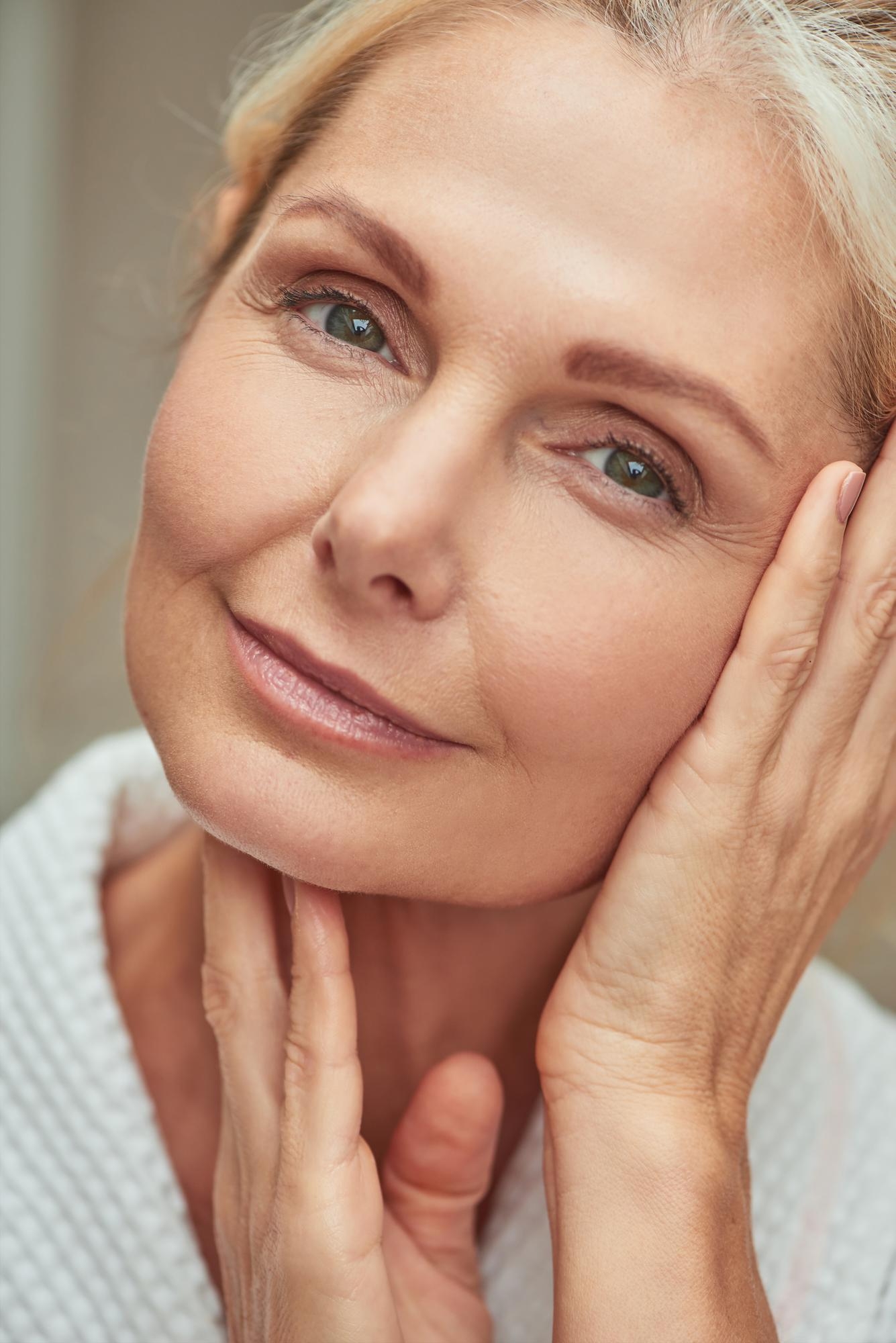
Close-up portrait of a mature blonde woman with subtle makeup gently touching her face, highlighting natural skin texture and fine lines.

Recovery and Results: What to Expect

In the period immediately after surgery, it is common to notice mild, temporary blurring of vision. This usually occurs because a protective antibiotic ointment is applied to the eye and surgical areas to prevent dryness and support healing. You will be advised to use this ointment several times a day, both on the eyelid incisions and within the eye itself. In some cases, artificial tear drops may also be recommended to ease any dryness during recovery.

Most patients are able to move around comfortably either later on the day of surgery or by the following morning. Swelling and bruising are a normal part of the healing process and can vary considerably from person to person. For upper eyelid surgery, these effects typically settle within one to two weeks, while combined upper and lower eyelid procedures may take slightly longer. As healing progresses, the signs of surgery gradually fade, leaving a more alert, refreshed, and revitalised appearance.

After blepharoplasty, many patients notice a clear improvement in drooping upper eyelids and under-eye fullness, resulting in a more rested and energised look. The eyelid contours appear smoother and better defined, helping the eyes look more open and expressive.

These changes often extend beyond appearance alone, positively influencing confidence and overall self-perception. Careful surgical planning and precise technique are essential to achieving results that feel natural and balanced. At The Ezra Clinic, a strong emphasis is placed on delivering outcomes that respect individual facial harmony while providing long-lasting aesthetic improvement.

Brunette woman smiling brightly while lifting her face slightly upward and framing her cheeks with both hands against a neutral gray backdrop.

When to Seek Professional Advice

Not all hooded eyelids require surgical treatment, and in some cases, non-surgical options or watchful observation may be more appropriate. The decision to pursue eyelid surgery should always be made in consultation with an experienced specialist who can provide an accurate diagnosis and discuss the full range of treatment options available.

Why Choose The Ezra Clinic?

The Ezra Clinic is recognised as a leading blepharoplasty clinic, with a strong focus on eyelid surgery alongside advanced medical aesthetics. Eyelid procedures at the clinic are approached with a deep understanding of the eye itself as well as both function and facial harmony, rather than as isolated cosmetic corrections.

Procedures are led by Daniel Ezra and his team, all internationally recognised oculoplastic surgeons with extensive experience in upper and lower eyelid surgery. His particular focus on hooded eyelids and complex eye-area concerns is supported by a strong academic and clinical background. His approach is characterised by precision, safety, and a commitment to achieving natural-looking results.

A Combined Medical and Aesthetic Perspective

One of the defining features of The Ezra Clinic is its unique positioning as a clinic that integrates oculoplastic surgery with medical aesthetics. This combined approach allows eyelid surgery to be planned within the wider context of facial balance and long-term ageing. Treatments are never one-size-fits-all, but are instead tailored to the patient’s anatomy, skin quality, and personal goals.


Latest articles

Close-up portrait of a smiling blonde woman with clear glowing skin gently touching her cheek, soft natural makeup, and a light gray background.

Considering Eyelid Surgery for Hooded Eyes? Here’s How It Works

Daniel Ezra Blog

View Post

Contact us

If you are interested in any of the treatments we offer, or require any clarifications, we would love to hear from you. We deal with all issues relating to the Harley Street and Moorfields practices. You can reach us by phone, by email or by filling out the contact form below.

This field is for validation purposes and should be left unchanged.
This field is hidden when viewing the form
Please tell us how you heard about us