Blepharoplasty Recovery FAQs
Is Recovery from Upper or Lower Blepharoplasty Longer?
Recovery can differ depending on whether upper or lower blepharoplasty is performed. Upper blepharoplasty often has a relatively predictable early recovery, while swelling following lower eyelid surgery may take longer to fully settle.
Patients undergoing combined upper and lower blepharoplasty may experience more noticeable bruising and swelling during the early stages of recovery. However, individual healing and the surgical technique used also influence the overall recovery timeline.
When Can You Return to Work After Blepharoplasty?
For lower blepharoplasty, Many patients plan to take around one to two weeks away from work following blepharoplasty. By this stage, the most noticeable bruising and swelling have often improved considerably.
For upper blepharoplasty, it is usually imperceptible that the patient has had surgery after 7-10 days.
Those working remotely or in desk-based roles may feel comfortable returning to work sooner. Patients with public-facing roles may prefer to allow additional time for visible bruising to fade, while physically demanding jobs may require a longer recovery period.
When Can You Exercise After Blepharoplasty?
Gentle walking and light movement are encouraged during the early recovery period. However, strenuous exercise should generally be avoided during the initial stages of eyelid healing.
Exercise can increase blood pressure, which may worsen swelling or increase the risk of bleeding. Your return to exercise should be gradual and guided by your surgeon’s advice. We generally recommend avoiding strenuous exercise for 2 weeks after surgery.
What Can Affect Blepharoplasty Recovery Time?
Several factors can influence how quickly you recover after blepharoplasty. These include whether you have upper, lower or combined eyelid surgery, the surgical technique used and your individual healing response.
Age, skin quality, smoking and previous eyelid or facial surgery may also affect recovery. Following your post-operative instructions carefully and attending scheduled follow-up appointments are important parts of supporting the healing process.
How Can You Support Recovery After Blepharoplasty?
Following your surgeon’s individual post-operative instructions is one of the most important parts of blepharoplasty recovery. You may be advised to keep your head elevated and use cold compresses during the early healing period.
Avoid rubbing the eyes and protect healing scars from sun exposure. You should also attend all recommended follow-up appointments and avoid smoking, as smoking can negatively affect the body’s ability to heal.
When Should You Contact Your Surgeon During Blepharoplasty Recovery?
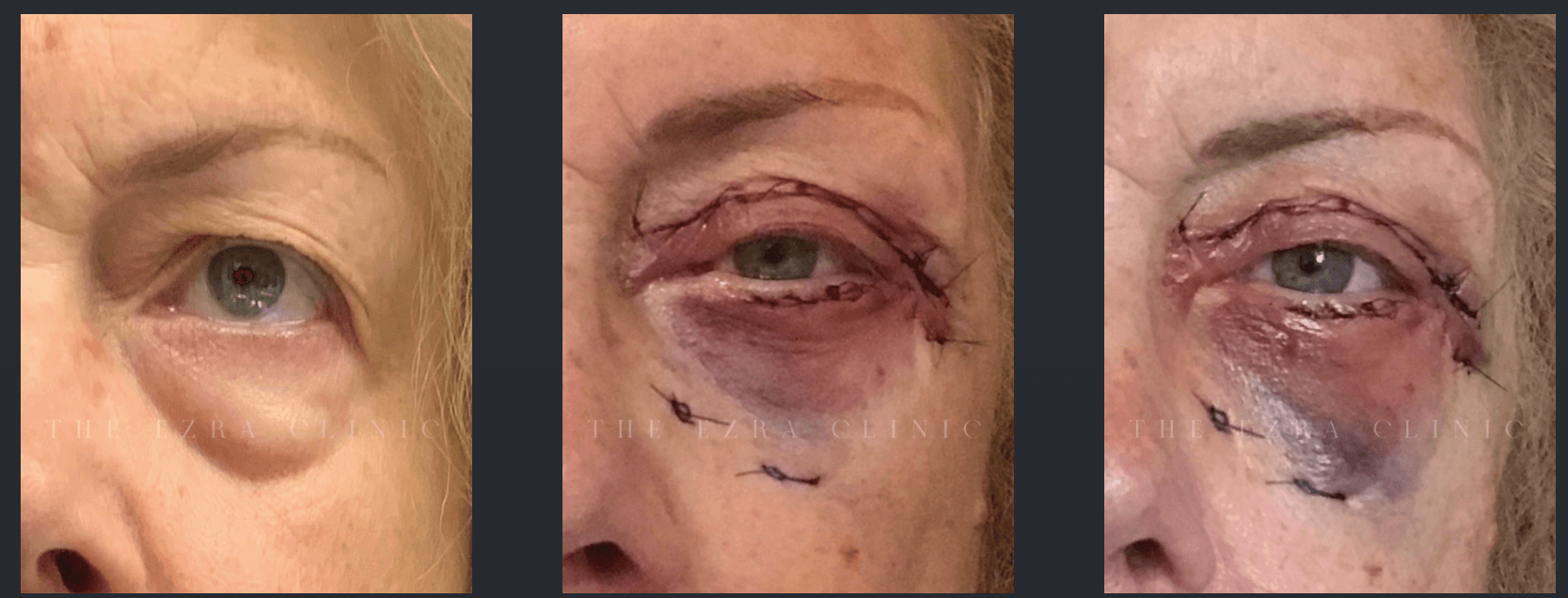
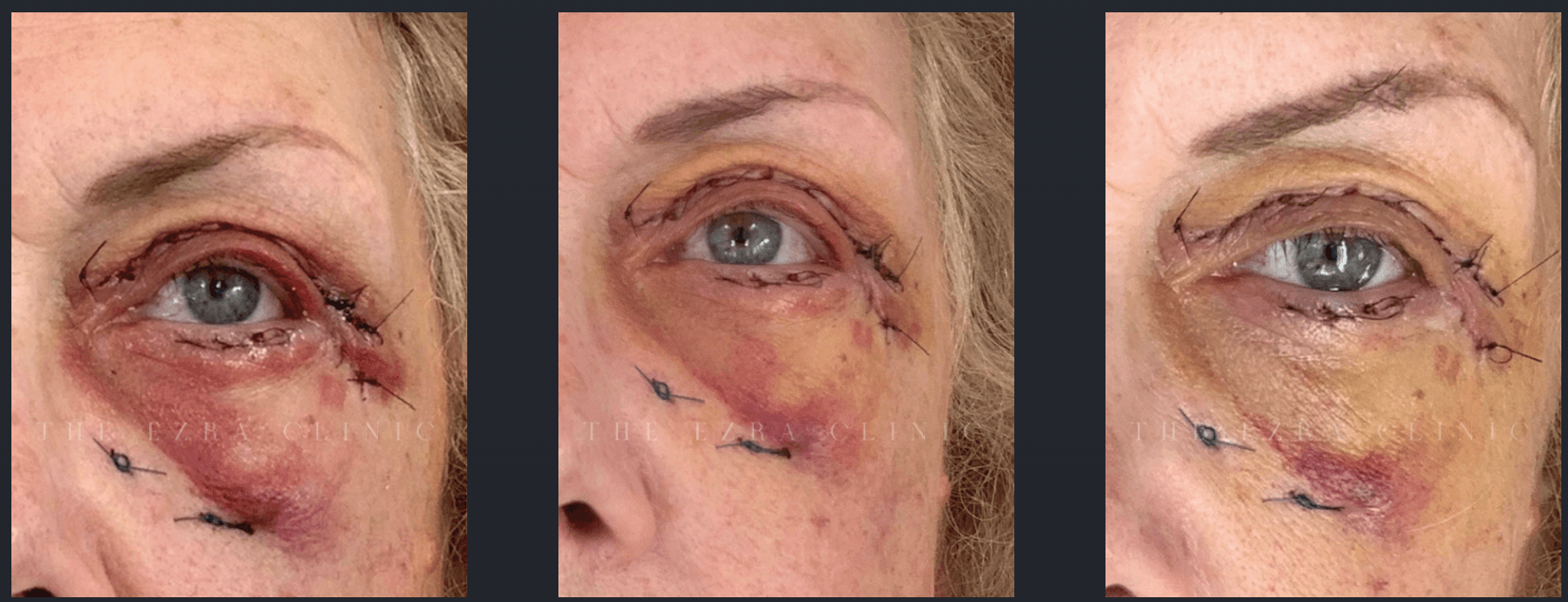
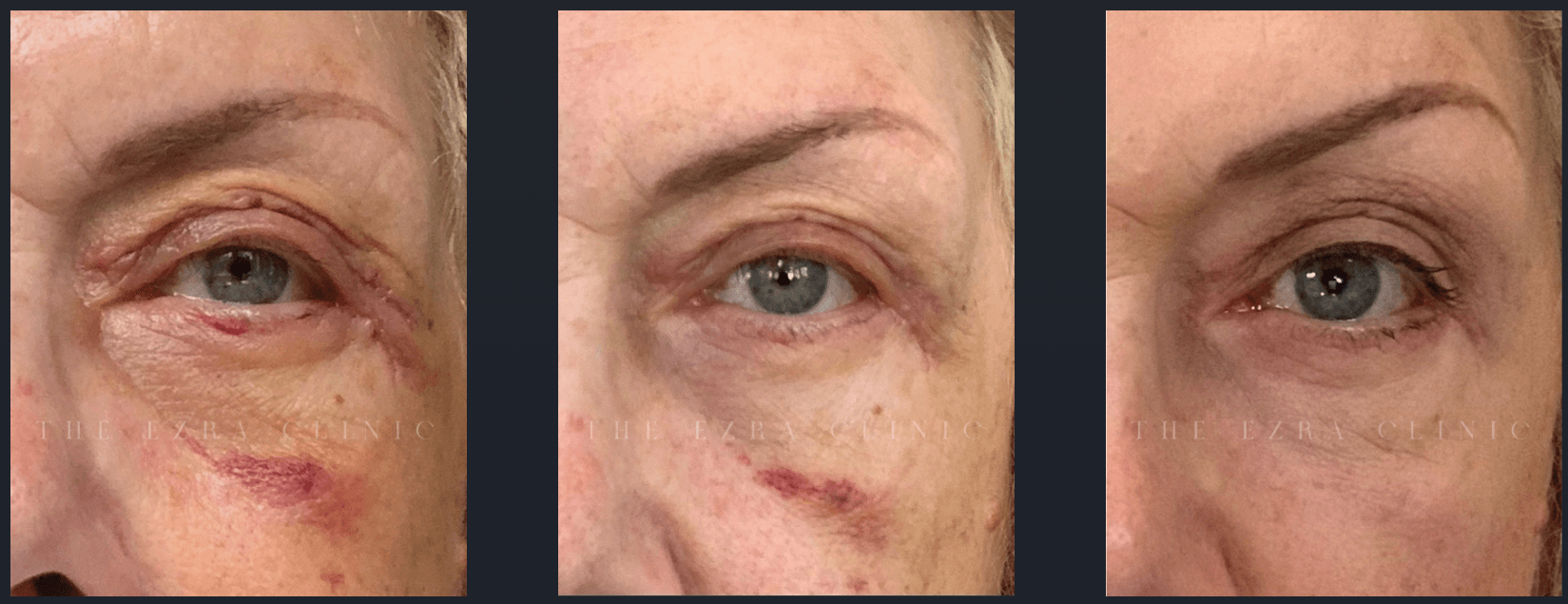
Some bruising, swelling, tightness and discomfort are expected after blepharoplasty. As the timeline above demonstrates, these symptoms can become more noticeable during the first few days before gradually improving.
At The Ezra Clinic, you will have a phone call on day 1 after surgery and open communication with the surgical and nursing team.
However, you should contact us if you experience severe or worsening pain, sudden changes in vision, significant bleeding or any other unexpected symptoms. Always follow the specific post-operative guidance provided by the clinic and seek advice if you are concerned about your recovery.