How Does Canthoplasty Work?
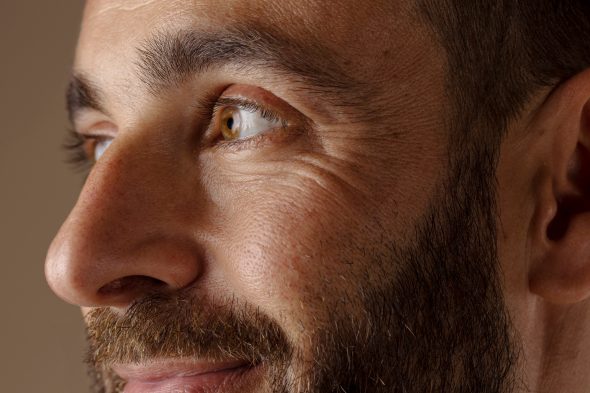
Canthoplasty is designed to restore strength and support to the lower eyelid by repositioning the lateral canthal tendon, the structure responsible for stabilising the outer corner of the eye. Rather than simply tightening the skin, the procedure corrects the eyelid’s underlying support, helping it sit in a healthier, more natural position. This is performed by actually cutting the canthal tendon and reattaching it in a tighter position.
Depending on your individual anatomy and treatment goals, the procedure uses specialised techniques to strengthen and reposition the outer corner of the eye, improving lower eyelid support and restoring a more harmonious eye contour. This can improve canthal tilt, reduce scleral show and create a more refreshed appearance while maintaining the natural character of your eyes.
Because the procedure addresses the eyelid’s structural support, results are typically more stable and long-lasting than treatments that focus only on the surface tissues.
Canthoplasty Recovery
Recovery after canthoplasty is generally straightforward, although it is normal to experience some bruising, swelling and mild discomfort during the first few days after surgery. These symptoms gradually improve as the eyelid heals, and most patients notice a significant improvement within the first two weeks.
Patients are usually advised to avoid strenuous exercise, heavy lifting and activities that may place unnecessary pressure on the eyes during the early stages of recovery. Your surgeon will also provide detailed aftercare instructions to help minimise swelling and support optimal healing.
Most people feel comfortable returning to work and normal daily activities within two to three weeks, although complete healing and the final surgical outcome may continue to develop over the following months. As swelling settles, the improved eyelid position and refined eye contour become increasingly apparent.
Regular follow-up appointments are an important part of recovery, allowing your surgeon to monitor healing and ensure the eyelids are recovering as expected.
Canthopexy vs. Canthoplasty
Although the terms canthopexy and canthoplasty are often used interchangeably, they describe two different procedures with distinct purposes.
Canthopexy is generally a less invasive procedure that reinforces the existing lateral canthal tendon without significantly altering its position. It is most commonly recommended for patients with mild lower eyelid laxity who require additional support rather than structural correction. Canthopexy is a simple suture placed in the corner of the eye under the skin to reinforce the tendon. Although it has a role, it has limited effect on its own, and outcomes are sometimes exaggerated by non-oculoplastic surgeons who lack the training to understand the differences between these approaches.
Canthoplasty, on the other hand, is a more comprehensive surgical procedure. Rather than simply reinforcing the tendon, it allows the surgeon to reposition the lateral canthus itself, providing greater control over eyelid support, canthal tilt and overall eye contour. This makes it the preferred option for patients requiring more significant correction or reconstruction.
| Canthopexy | Canthoplasty |
| Less invasive procedure | More comprehensive surgical procedure |
| Reinforces the existing tendon | Much stronger reinforcement and also repositions the lateral canthus |
| Suitable for mild lower eyelid laxity | Suitable for greater structural correction |
| Produces subtle changes | Produces more significant and longer-lasting correction |
The most appropriate procedure depends entirely on your anatomy and the concerns being treated. During your consultation, your oculoplastic surgeon will assess your eyelids and explain whether canthopexy or canthoplasty is more suitable for achieving your desired outcome.