

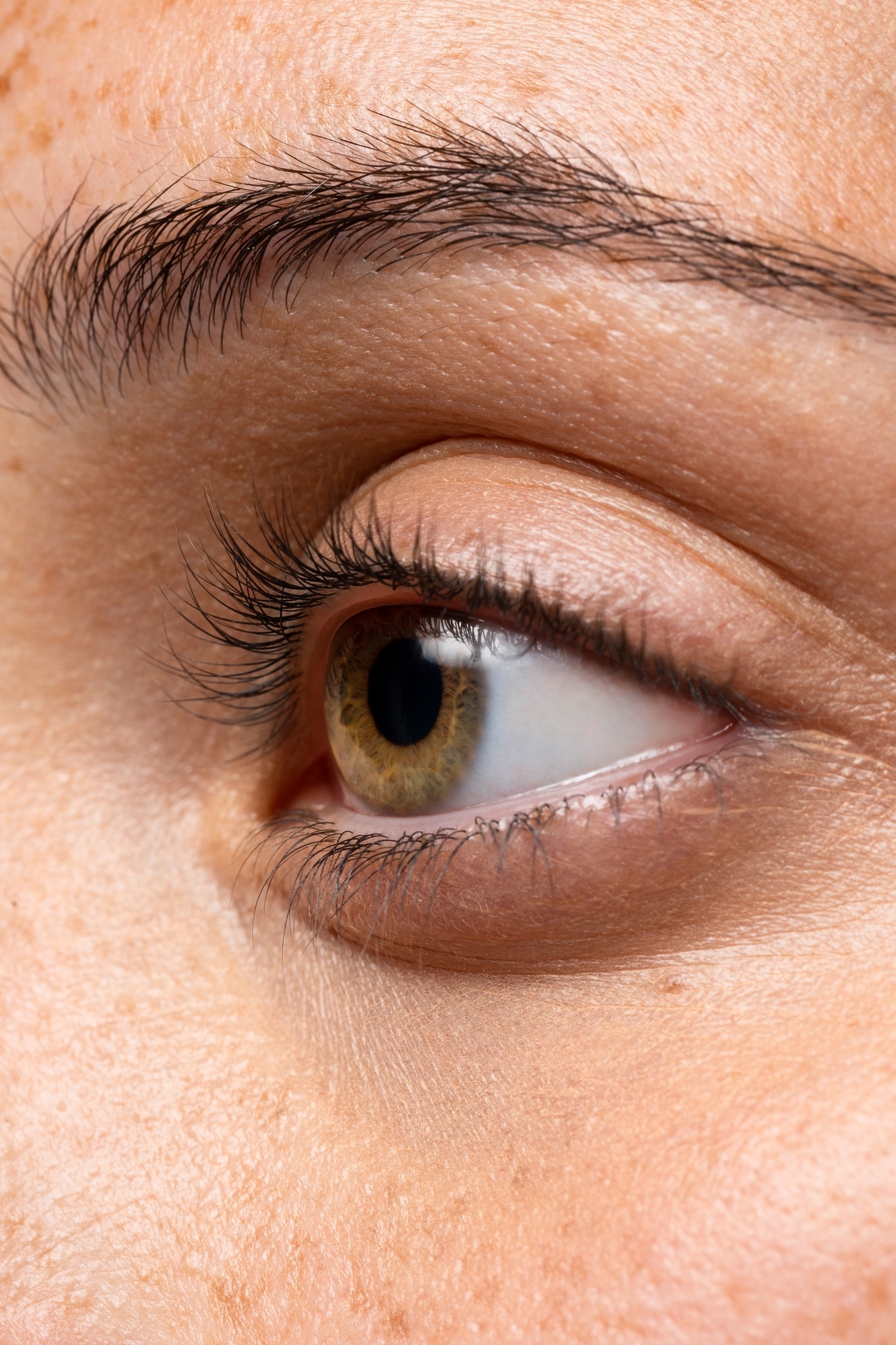


What Causes Dark Circles Under the Eyes?
To treat dark circles effectively, it is essential to understand what is actually causing them. There are several distinct factors that can contribute, and in many cases, more than one is present at the same time.
Pigmentation is one of the most common causes, often linked to genetics or cumulative sun exposure. This results in a brownish discolouration beneath the eyes that can be difficult to conceal.
In others, the issue is not pigmentation at all, but rather the appearance of blood vessels visible through exceptionally thin skin, giving the area a bluish or purplish tone.
Volume loss is another significant factor: as we age, the fat pads beneath the eyes diminish, creating a hollow known as a tear trough deformity that casts a shadow and gives the impression of darkness.
Fluid retention and puffiness can also make the under-eye area appear swollen and shadowed.
Finally, lifestyle factors such as poor sleep, chronic stress, and dehydration can all worsen the appearance of dark circles, regardless of the underlying cause.
Why There Is No One-Size-Fits-All Solution
Treating all dark circles in the same way consistently leads to disappointing outcomes. One of the most common mistakes is reaching for a single method (whether that is a dermal filler, a topical product, or a specific procedure) without first conducting a proper assessment.
Applying the wrong treatment not only risks producing minimal improvement but can, in some cases, lead to an unnatural appearance or even make the concern worse. A personalised, combination-based approach is almost always the most effective strategy.